
When you build for generations, the choice of building material matters.
Construction today is moving towards materials that can offer more than just strength. Builders, architects, contractors, and homeowners are increasingly looking for solutions that can make construction lighter, faster, more efficient, and environmentally responsible.
One such solution is AAC blocks.
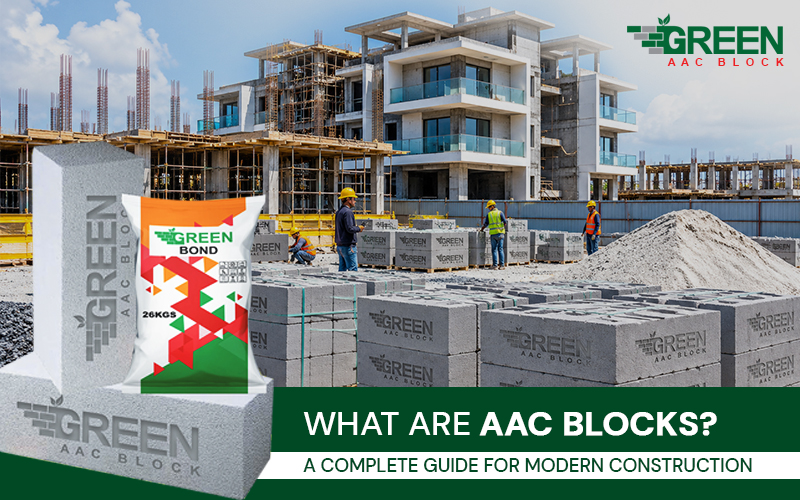
AAC stands for Autoclaved Aerated Concrete. These lightweight concrete blocks have become increasingly popular in modern construction because of their combination of low weight, strength, thermal insulation, dimensional accuracy, and ease of installation.
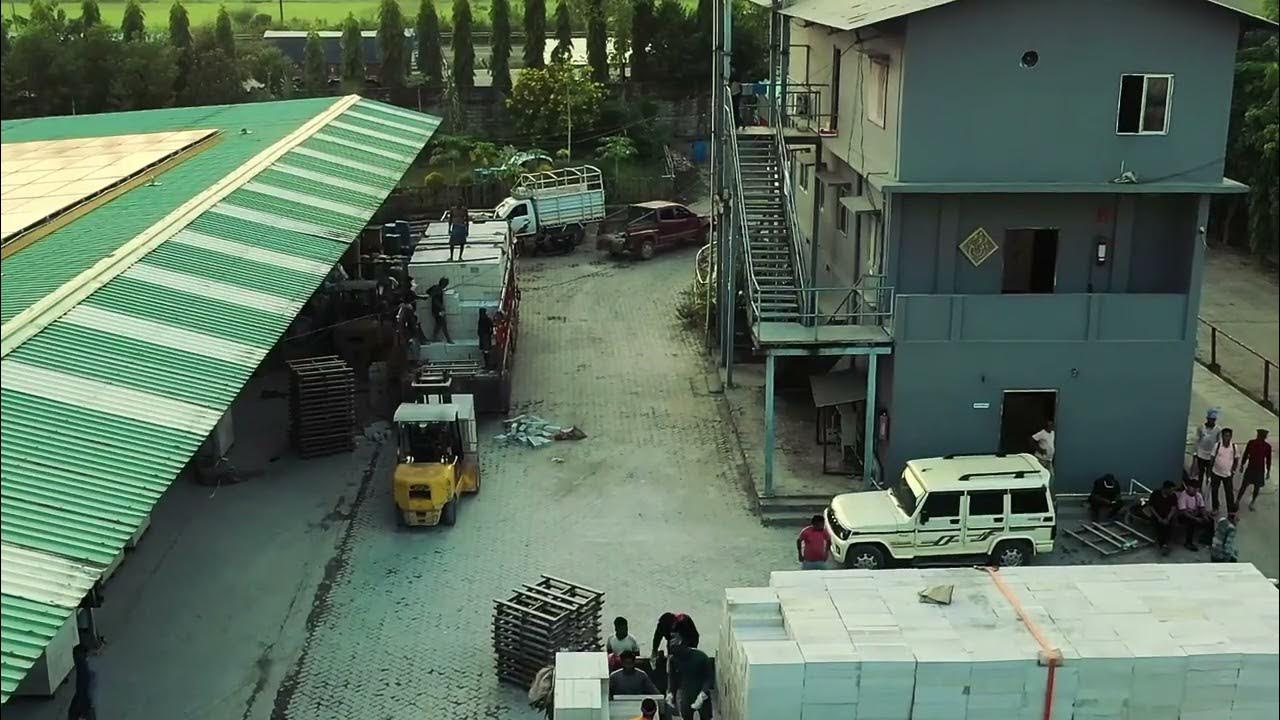
At Green AAC, we are part of this shift towards smarter construction. A part of the KD Group of Industries, Green AAC has grown into a major AAC block manufacturer in Northeast India, with over 5.5 lakh CBM of annual production capacity, two operational manufacturing plants, and a third plant on the horizon.
With manufacturing facilities in Rangia and Silchar, Assam, Green AAC is focused on making quality walling solutions accessible to the region's growing construction sector.
But what exactly are AAC blocks? How are they made? What makes them different from conventional bricks? And why are they becoming an important choice for modern construction?
Let's understand.
What Are AAC Blocks?
AAC blocks are lightweight precast concrete masonry units manufactured using a carefully controlled mixture of materials such as cement, lime, sand, gypsum, water, and an aerating agent.
During manufacturing, the aerating agent creates millions of tiny air pores throughout the material. These pores give AAC its distinctive cellular structure and are responsible for its lightweight nature and thermal insulation properties.
The blocks are then cut into precise dimensions and cured inside an autoclave using high-pressure steam. This process helps the blocks develop the required strength and stability.
The result is a masonry material that is considerably lighter than many conventional walling materials while offering the performance required for a wide range of construction applications.
How Are AAC Blocks Made?
The quality of an AAC block begins with its manufacturing process. At a modern AAC manufacturing facility, production involves several carefully controlled stages.
1. Raw Material Preparation
The required raw materials are selected and measured according to the manufacturing formulation. These typically include cement, lime, sand, gypsum, water, and an aerating agent.
2. Mixing
The ingredients are mixed to form a consistent slurry. Maintaining the correct proportions is important for achieving uniform properties in the finished product.
3. Aeration
An aerating agent is introduced into the mixture. It reacts with the alkaline components and produces tiny gas bubbles throughout the material.
These bubbles create the characteristic cellular structure of AAC.
4. Pre-Curing
The aerated mixture expands and gradually develops the required firmness before it is ready for cutting.
5. Precision Cutting
The semi-solid material is cut into blocks of specific dimensions.
Precise cutting helps achieve greater dimensional consistency, making the blocks easier to lay and align during construction.
6. Autoclaving
The cut blocks are placed inside an autoclave, where they are cured using high-pressure steam.
Autoclaving is an important part of the process because it helps the blocks achieve their required strength and stability.
7. Quality Checks
Finished blocks are checked for relevant properties such as density, compressive strength, dimensions, and overall quality before they are supplied to construction sites.
At Green AAC, quality and consistency are central to our manufacturing approach, supported by product testing and certification documentation.
Why Are AAC Blocks Lightweight?
The most recognisable feature of AAC is its lightweight nature.
During manufacturing, millions of tiny air pores are formed within the block. These pores reduce the overall density of the material while allowing AAC blocks to provide the performance required for their intended masonry applications.
Green AAC blocks are designed to be up to 70% lighter than conventional masonry, helping reduce the dead load contributed by walls.
This lower weight can also make blocks easier to handle, transport, lift, cut, and install at a construction site.
For large projects, reducing the weight of masonry can also have implications for structural design and material requirements.
Key Benefits of AAC Blocks
AAC blocks offer several advantages that make them suitable for modern construction.
1. Lightweight Construction
The low density of AAC blocks makes them easier to handle than heavier conventional masonry units.
A lighter walling material can also reduce the dead load on a building. This can be particularly useful in multi-storey construction and projects where structural weight is an important consideration.
2. Faster Construction
AAC blocks are considerably larger than traditional clay bricks.
Because each block covers a larger wall area, fewer units are required to construct a wall. Their precise dimensions can also make alignment and installation easier.
With the right installation practices, larger blocks and faster setting can contribute to shorter masonry timelines.
Green AAC's larger aerated blocks are designed to help reduce project timelines by nearly 40%, depending on project conditions and construction practices.
3. Better Thermal Insulation
The tiny air pockets inside AAC blocks help reduce heat transfer through the wall.
This can help maintain more comfortable indoor temperatures and may reduce dependence on mechanical cooling, depending on factors such as building design, climate, ventilation, windows, and other construction materials.
For a region such as Northeast India, where buildings experience heat, humidity, heavy monsoons, and seasonal variations, thermal performance can be an important consideration.
Green AAC develops its AAC products with the region's construction requirements in mind.
4. Reduced Mortar Consumption
AAC blocks are manufactured with relatively precise dimensions.
This allows them to be installed using suitable AAC block adhesive with thin joints rather than relying entirely on conventional thick mortar joints.
Green AAC's precision-cut blocks can reduce mortar requirements by up to 80%, depending on the construction system and site practices.
Less mortar can mean reduced material consumption, cleaner masonry, and potentially lower labour requirements.
5. Easier Handling
Because AAC blocks are lightweight, they are easier to handle at the construction site.
This can simplify activities such as lifting, positioning, cutting, and installation.
Green AAC also focuses on supporting proper installation practices so that contractors and masons can get the intended performance from AAC masonry.
6. Fire Resistance
AAC is a mineral-based construction material and offers good resistance to fire.
The actual fire performance of an AAC wall depends on factors such as block density, wall thickness, construction details, and the complete wall system.
For projects where fire performance is an important consideration, AAC can be a suitable walling material when correctly specified and installed.
7. Sound Insulation
AAC's cellular structure can also contribute to sound insulation.
The actual acoustic performance depends on the complete wall assembly, including block density, wall thickness, plastering, openings, joints, and other construction details.
This can make AAC a useful option for buildings where indoor acoustic comfort is important, including homes, offices, schools, and healthcare facilities.
8. Efficient Transportation
Lightweight construction materials can also offer advantages during transportation.
Because Green AAC blocks weigh less than conventional masonry, more volume can be transported in a single trip. This can help reduce transportation requirements and associated fuel consumption.
AAC Blocks and Sustainable Construction
Sustainability in construction is no longer limited to the materials visible after a building is completed. It also involves considering how materials are manufactured, transported, installed, and used throughout a building's life.
AAC can contribute to more resource-efficient construction through:
- Lower material weight
- Reduced transportation weight
- Lower mortar consumption
- Thermal insulation
- Efficient installation
- Reduced construction waste
- Long-term building performance
Green AAC places sustainability at the centre of its approach, with a focus on responsible manufacturing and efficient use of resources.
The overall environmental performance of any building, however, depends on its complete design, materials, energy use, transportation, and construction practices.
Where Are AAC Blocks Used?
AAC blocks can be used across a wide range of construction projects.
Common applications include:
- Residential houses
- Apartments
- Villas
- Commercial buildings
- Offices
- Hotels
- Hospitals
- Schools and educational institutions
- Industrial buildings
- Institutional projects
- Internal partition walls
- External infill walls
The appropriate block density, thickness, and strength should always be selected according to the requirements of the project.
Are AAC Blocks Strong Enough?
One of the common questions about lightweight blocks is whether they can provide sufficient strength.
The answer depends on the grade, density, application, manufacturing quality, and construction system.
AAC blocks are engineered masonry products designed for specific applications. Their lightweight nature does not mean they are simply fragile or unsuitable for substantial construction.
However, it is important to distinguish between the compressive strength of an individual block and the structural capacity of an entire building.
Foundations, columns, beams, slabs, walls, lintels, reinforcement, and other structural components must be designed according to the requirements of the project and applicable standards.
What Should You Check Before Buying AAC Blocks?
Choosing AAC blocks is not simply about finding the lowest price.
Before selecting a product, consider the following:
Density
Density influences weight, strength, and thermal performance. The appropriate density should be selected based on the application.
Compressive Strength
Check the specified compressive strength and ensure that it is appropriate for the intended use.
Dimensional Accuracy
Consistent dimensions can make block laying, alignment, and finishing easier.
Quality Standards
Always check whether the product meets the applicable quality and technical requirements.
Manufacturing Consistency
A controlled manufacturing process is important for maintaining consistent quality from batch to batch.
Manufacturer Support
Good technical guidance can make a significant difference to the performance of AAC masonry. Installation, handling, storage, cutting, jointing, and curing should all follow appropriate practices.
AAC Blocks vs Conventional Bricks: At a Glance
AAC blocks and conventional clay bricks have both found their place in construction, but the two materials differ considerably in how they are manufactured, handled, installed, and used.
|
Feature |
AAC Blocks |
Conventional Clay Bricks |
|
Primary Raw Materials |
Cement, lime, sand, gypsum, water and an aerating agent |
Clay, soil and other materials depending on the manufacturing process |
|
Manufacturing Process |
Moulding, aeration, precision cutting and high-pressure steam curing in an autoclave |
Moulding, drying and firing in a kiln |
|
Factory Production |
Produced in controlled industrial manufacturing plants |
Produced in brick kilns or organised brick manufacturing units |
|
Structure |
Cellular structure with millions of tiny air pores |
Dense, solid or relatively dense structure |
|
Weight |
Lightweight |
Comparatively heavier |
|
Block/Unit Size |
Larger units |
Smaller individual units |
|
Wall Coverage |
More wall area covered per block |
Less wall area covered per brick |
|
Construction Speed |
Generally faster |
Generally slower |
|
Dimensional Accuracy |
High when manufactured under controlled conditions |
Can vary depending on manufacturing quality |
|
Mortar Requirement |
Lower when installed with suitable thin-bed adhesive |
Generally higher with conventional mortar joints |
|
Thermal Insulation |
Good due to cellular structure |
Comparatively lower |
|
Handling |
Easier due to lower weight |
More labour-intensive |
|
Transportation |
Lower weight per unit of walling |
Higher weight per unit of walling |
|
Structural Dead Load |
Lower |
Higher |
|
Cutting & Shaping |
Can be cut relatively easily with suitable tools |
More difficult and can generate more breakage |
|
Typical Applications |
Residential, commercial, institutional and industrial walling |
Residential, commercial and other masonry applications |
|
Installation System |
Commonly installed using AAC block adhesive |
Traditionally installed using cement-sand mortar |
|
Sustainability Considerations |
Lightweight, efficient material use and thermal insulation |
Traditional material with energy-intensive firing process |
|
Consistency |
Factory-controlled production can provide consistent dimensions and properties |
Quality can vary depending on the manufacturing unit |
The comparison is intended as a general overview. Actual performance depends on the specific product, manufacturing quality, construction system, workmanship, and project requirements.
Why Green AAC?
Choosing an AAC block is also about choosing the manufacturing partner behind it.
Green AAC is a part of the KD Group of Industries, bringing the experience and scale of an established industrial group into the building-materials sector.
With more than 5.5 lakh CBM of annual production capacity, two operational manufacturing plants, and a third plant on the horizon, Green AAC is building a growing manufacturing network for the Northeast.
Our manufacturing facilities are located at:
Rangia, Kamrup, Assam
NH-31 IIDC, Borshil, Sotshil, Moranjana, Rangia.
Silchar, Cachar, Assam
Ramupur, Porgona-Borkhola, Lumding-Silchar Road, Silchar.
Our head office is located in Christian Basti, Guwahati, keeping Green AAC closely connected to the construction market and customers across the region.
Alongside AAC blocks, Green AAC also offers Green Bond, an AAC block adhesive designed for efficient and precise block installation.
Our goal is simple: to provide building materials that help make construction lighter, faster, cleaner, and more efficient.
Green AAC and the Northeast
Construction in Northeast India comes with its own set of considerations.
From heavy monsoons and humidity to varied terrain and changing climatic conditions, the region requires building materials that can perform reliably in different environments.
Green AAC was built with this market in mind.
With manufacturing facilities in Assam and a growing production capacity, Green AAC is positioned to serve builders, contractors, architects, distributors, and homeowners across the region.
As construction activity continues to grow across the Northeast, the need for modern and efficient building materials will grow alongside it.
Green AAC aims to be a part of that transformation.
Building your next project? Explore Green AAC's range of AAC blocks and Green Bond adhesive, or get in touch with our team to discuss your requirements.